Date posted: 25/09/2025

Giving careful thought to your packaging choices can support your business’s branding, functionality, sustainability and cost-efficiency. But with so many packaging and closure options available, it’s not always easy to decide what’s right for you.
Regardless of which industry you fit into and the scale of your business, we’re here to share our experience and expertise on different packaging and closure types. Our guide can help you navigate and understand your options, so you can make an informed decision for your business and customer base.
Date posted: 25/09/2025
Why packaging matters
Packaging should be at the forefront of your business decision-making because it plays an important role in protecting products, supporting branding and customer experience, alongside helping businesses meet logistical and regulatory requirements.
Packaging requirements and expectations can differ depending on the industry. While packaging for the food industry must, of course, be food safe, packaging used in the building & chemical industry must be sturdy and chemical-resistant, alongside meeting industry standards. Meanwhile, customer experience plays an important role in packaging in the lawn & garden industry, which is why at Tyler Packaging, we introduced a laminated woven polypropylene block-bottom sack to solve common waterproofing issues. In the pet food industry, resealable, sustainable, and food-safe packaging often matters to customers.
Tailoring your packaging and closure options based on what matters in your industry can be a game-changer.
Date posted: 25/09/2025
Different types of packaging
Any business using packaging will most likely be aware of just how many options are available, although it isn’t always obvious which type is suitable for your business and products. Whatever product categories your business covers, let’s delve into the different formats and materials, and discover which are best for various purposes.
Different packaging formats
Packaging can take many different forms and styles, from pouches to films. Here are some of the packaging types to consider, all of which are offered by us at Tyler Packaging.
Stand Up Pouches
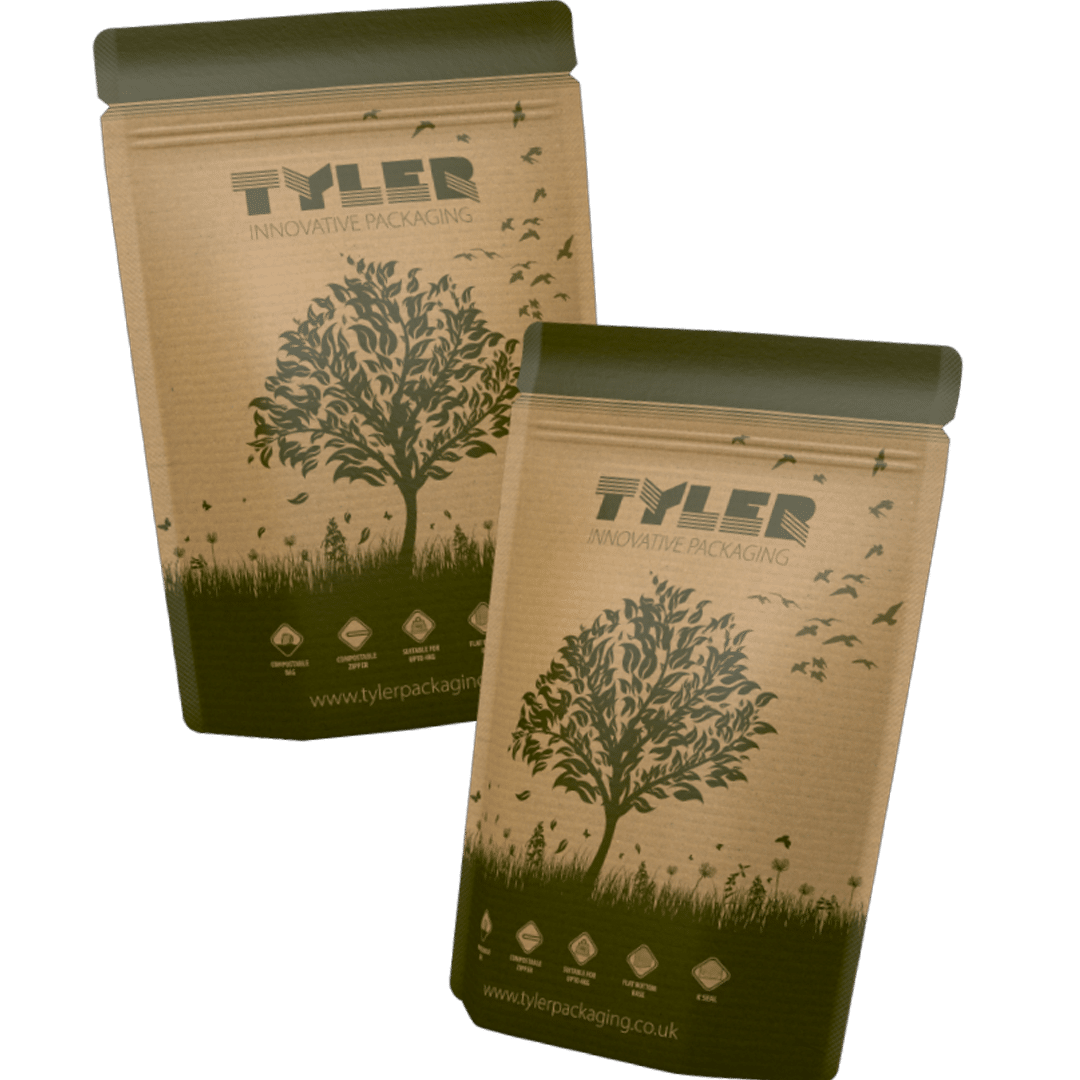
Stand-up pouches are lightweight and can be made with various materials and closure types.
This packaging format offers several benefits, such as:
-
- Excellent shelf life and product freshness
-
- Suitability for use with a variety of products across industries, including baby food, pet food (wet and dry), yoghurt and more
-
- Often designed to stand upright on a shelf, making it ideal for branding and standing out from competitor products
-
- Recyclable ready, making it a sustainable choice for businesses
Businesses can choose from several pouches in our range, including our Retort Pouch. This high barrier, monomaterial recyclable ready option is easy to open with tear notches, eliminating the need for scissors. It also complies with Ceflex guidelines on flexible packaging design.
Sacks
A sack is usually large and durable, designed for transporting and storing bulk quantities of materials. Thanks mainly to the durability, this is ideal for many industries, including lawn & garden, food, and building & chemical industries.
Its benefits include the following:
-
- Can be made using various materials like paper, polywoven and recyclable ready plastics, giving you more options to improve sustainability
-
- Usually best for bulk and raw material storage and transportation
-
- Customisable options allowing for different closure types, designs, colours and sizes, making them versatile
An example of this format is our Recyclable Valve Sack, featuring micro perforation for product ventilation, easy customisation and a capacity to hold between 5kg and 25kg. This option offers excellent performance for a range of products and is made using recyclable materials to contribute to a circular economy.
FFS Film
FFS Films packaging is often lightweight and flexible, although its qualities can vary depending on the material it’s made from. Commonly used for packaging dry food products such as pulses, rice, fruit and vegetables, films can be used to protect goods, keeping them secure, safe and fresh.
At Tyler Packaging, we offer Conventional Film, Recyclable Film and Compostable Film packaging, all of which can be made up to 1.5m wide, provide customisation options and can be combined with various closure types depending on your needs.
Different packaging materials
There are plenty of different material options to choose from when it comes to your packaging. Below, we’ll run through the benefits of each one, what it’s commonly used for and how it can help you meet sustainability goals and regulations.
Paper based
Paper based packaging is just that – made predominantly with paper. However, this type of packaging can also be made with wood pulp, hemp or bamboo as these are all used to make paper.
It offers plenty of advantages, with the biggest being that it’s curbside recyclable and will be recycled. Paper can also be more durable than you might think, especially when layered or used to create corrugated packaging. Another major benefit is that paper based packaging is lightweight compared to rigid packaging, helping you save on shipping costs. However, it’s worth knowing that it often isn’t as lightweight as plastic packaging.
Other disadvantages of paper packaging are that it has a limited shelf life, an arguably greater impact on the environment compared to plastic and uses more energy in the recycling process.
Polywoven
Polywoven is made from high strength polypropylene fabric, giving packaging made from this material excellent durability and flexibility, alongside being scuff, tear and water resistant. Able to be recyclable ready and reused, this material is also sustainable.
Thanks to the advantages it offers, polywoven packaging can be used for various products, from sharp building materials to large quantities of bulk food. It can even improve operations before packaging your products since it can easily be folded and stored.
Recyclable ready plastic
This format of packaging is made from plastics designed and manufactured to be reused after their initial use. Recyclable ready plastic packaging often has all the same benefits of conventional plastic packaging, from durability to excellent shelf life, but it also improves sustainability and helps businesses meet industry standards. Meeting Extended Producer Responsibility (EPR) guidelines and avoiding Plastic Packaging Tax (PPT) are some of the biggest cost benefits of this packaging format, making it an attractive choice, although food-approved recycled materials are still not readily available.
Date posted: 25/09/2025
Packaging closure types
Packaging closure types are critical for many reasons, from usability and freshness to safety and tamper protection. Different options are available depending on your needs, so let’s take a closer look at the types.
Spouts & caps
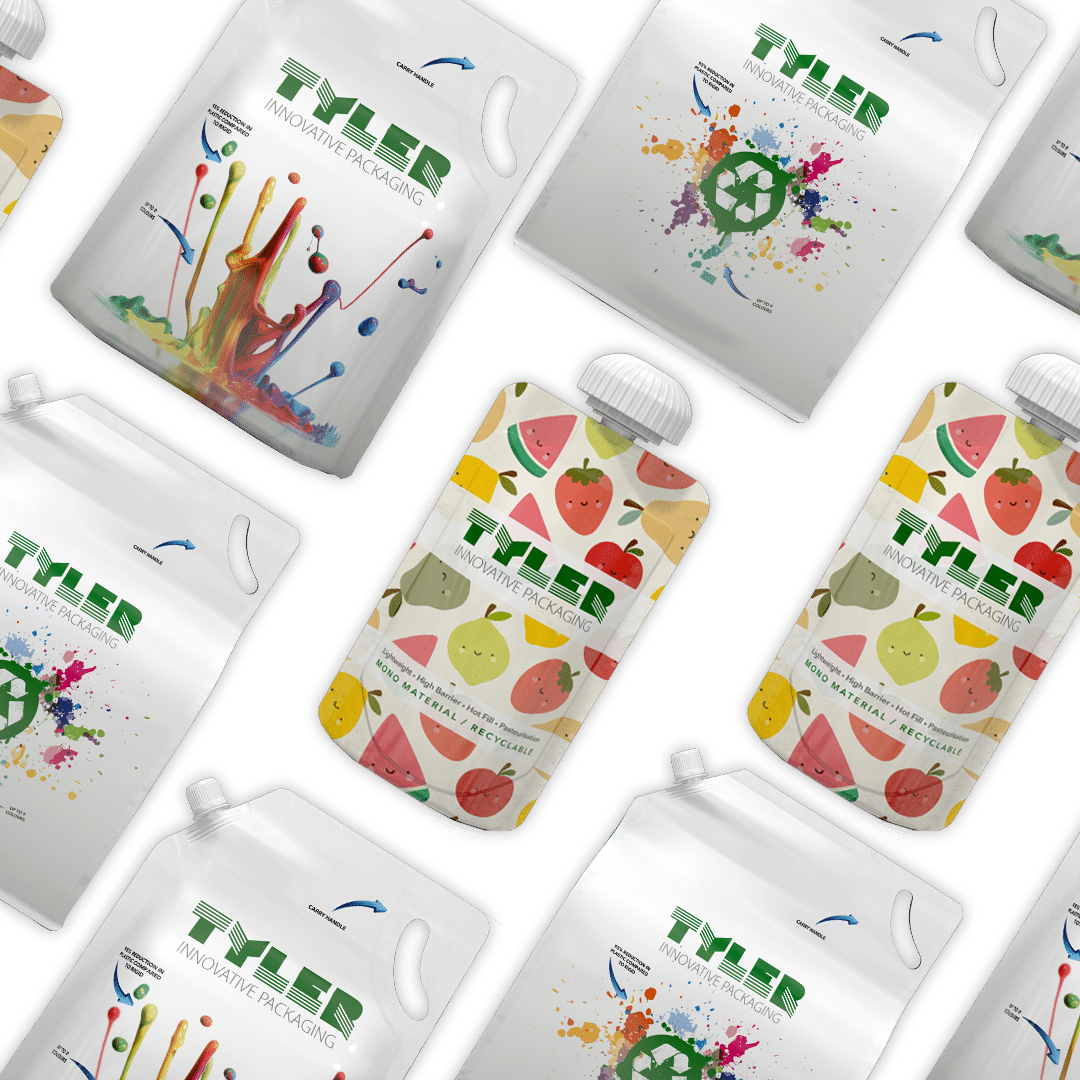
A cap closure is commonly used when a pourable liquid product is intended for multiple uses and comes with a spout. Providing tamper protection, the option of child-resistant caps, choke-proof caps and different finishes and material choices, a cap and spout can be a great option for food and pet food businesses. Whether you offer baby purees, yoghurts or stocks, a cap will ensure freshness, ease of use, prevent leakages and the safety of customers. From our product range, the Recyclable Spout Pouch is made with a cap and spout closure. Meanwhile, Tyler’s Recyclable Spout Pouch with a corner spout and cap closure and a flat bottom creates a stable, easy to use product for customers. Also offering an optional corner handle for easy carrying and pouring, this packaging option can hold liquids with a volume of up to 1 litre.
Not only can this closure type be combined with sustainable packaging materials, but it also ensures usability for customers on a range of products across industries. Whether you’re offering haircare, skincare, oils, sauces or other liquids and semi-liquids, this will prevent contamination and allow for simple product dispensing.
Tear notch
The main benefit of tear notch packaging is the ease of opening, since users can easily tear off the strip at the top of the packaging without scissors. This can also be combined with resealable features like a zipper to keep products fresh and contained.
A tear notch closure can be useful for many purposes where usability is key, including packaging products like tea, coffee, cereal and even chemicals when combined with a suitable packaging format.
Our Recyclable Flat Based Pouch, which is designed to be recyclable ready, can feature a tear notch closure. This is suitable for use across industries like health, nutrition, food, pet food, garden and building due to its versatility.
Resealable zipper
Packaging featuring a resealable zipper is all about maintaining the freshness of food products. Ideal for everything from fresh and dried fruit to large quantities of dog food, a resealable zipper closure means that customers can extend the life of their product while keeping it sealed for easy storage when not in use. An example of this packaging is our Conventional Stand Up Pouch, which can have a range of closure options, including a resealable zipper.
Date posted: 25/09/2025
How Tyler Packaging can help
Need help deciding which packaging and closure types are right for your business? As a knowledgeable packaging provider, Tyler Packaging is here to help. With tailored solutions by industry, sustainable material sourcing and digital print capabilities, we can help you solve packaging issues and meet customer needs.
Want to find out more or enquire about how we can offer guidance for your business? Let’s chat!