Date posted: 16/11/2026

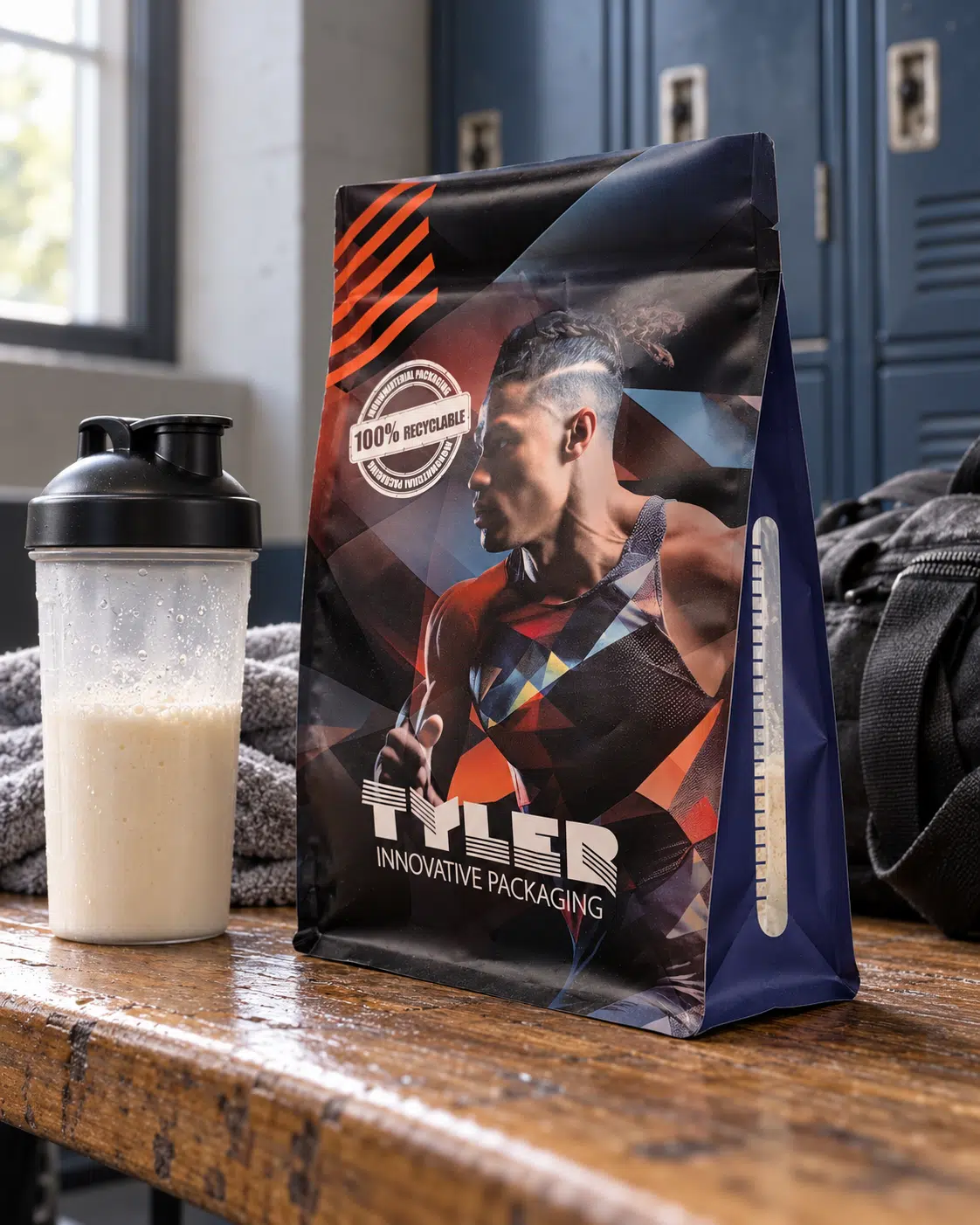
As sports nutrition brands look to make their packaging more sustainable, recyclable flexible packaging is becoming an increasingly important consideration. But how does it work, and can recyclable packaging provide the protection needed for products such as protein powder and creatine?
The answer lies in the materials used to make the packaging. By moving away from traditional mixed-material structures towards suitable mono-material alternatives, brands can explore packaging designed to work with compatible recycling streams.
However, choosing recyclable protein powder packaging is not simply about changing the material. The packaging must still protect the product from moisture, oxygen and other external factors that could affect its quality.
In this guide, we explain how recyclable flexible packaging works, the materials available and what sports nutrition brands need to consider before making the switch.
Date posted: 16/11/2026
What is recyclable flexible packaging?
Flexible packaging is made from materials such as plastic films that can be formed into pouches, bags and other packaging formats.
Traditional flexible packaging often combines different materials to achieve specific performance requirements. For example, a structure might use several layers to provide strength, sealing properties and protection against moisture or oxygen.
While these combinations can offer excellent product protection, they can make recycling more challenging. This is because different materials are often difficult to separate during the recycling process.
Recyclable-ready flexible packaging takes a different approach. It uses material structures designed to be compatible with specific recycling streams, making it easier for the packaging to be processed where suitable collection and recycling facilities exist.
One common approach is mono-material packaging.
Date posted: 16/11/2026
How does mono-material packaging work?
Mono-material packaging is designed around one main material type rather than combining multiple different materials.
For flexible plastic packaging, two commonly used material options are:
- Mono-PE (polyethylene): A flexible packaging structure designed around polyethylene as its main material.
- Mono-PP (polypropylene): A flexible packaging structure designed around polypropylene as its main material.
Both can be used to develop recyclable-ready packaging, depending on the complete structure, packaging design and recycling infrastructure available.
Mono-PE packaging
Polyethylene is widely used in flexible packaging because of its versatility and ability to be formed into different pouch and film structures.
Mono-PE packaging is designed to be compatible with relevant PE recycling streams. It can be used to create flexible packaging options for products such as protein powders and other dry supplements.
However, protein powder packaging still needs to provide suitable protection against moisture and, where required, oxygen. This means the structure needs to be developed around the product’s specific barrier requirements.
Mono-PP packaging
Polypropylene is another material used in flexible packaging. Mono-PP structures offer an alternative to PE-based packaging and can be designed to support compatible PP recycling streams.
As with mono-PE, the complete packaging specification needs to be considered. The material, thickness, additional layers, printing and any other components can all influence recyclability.
The important point is that mono-material packaging is designed to make recycling more achievable, but the complete packaging structure must still meet the relevant recyclability criteria.
Date posted: 16/11/2026
Is recyclable packaging suitable for protein powder and creatine?
One of the biggest considerations for sports nutrition brands is whether recyclable packaging can provide the protection their products need.
Protein powders and creatine are often packaged in flexible pouches, but their exact requirements can vary depending on the formulation, ingredients and intended shelf life.
The packaging needs to help protect the product from external factors that could affect its quality.
- Moisture protection
Moisture is an important consideration for powdered products.
If moisture enters the packaging, it can affect the powder’s texture and consistency, potentially causing clumping and making the product less convenient to use.
A suitable packaging structure needs to provide the level of moisture protection required by the product.
- Oxygen protection
Oxygen can affect certain ingredients and formulations, making oxygen barrier performance another important consideration.
The level of protection required will depend on the product’s composition and sensitivity. Some formulations may need a stronger oxygen barrier than others.
- Aroma protection
Packaging can also help retain the intended aroma of a product and prevent external odours from affecting it.
This can be particularly relevant for flavoured protein powders and sports nutrition supplements.
- Product shelf life
The packaging structure plays an important role in helping maintain product quality throughout its intended shelf life.
However, shelf life is not determined by packaging alone. The formulation, manufacturing process, filling conditions and storage environment also need to be considered.
Date posted: 16/11/2026
Can recyclable packaging provide enough protection?
Yes, suitable recyclable-ready structures can be developed to provide the barrier performance required by protein powders and creatine products.
The key is selecting the right material structure for the specific application, rather than assuming that every recyclable-ready pouch will provide the same level of protection.
Date posted: 16/11/2026
Can recyclable packaging provide high barrier protection?
This is an important question for sports nutrition brands considering a move away from conventional flexible packaging.
Traditional multi-material laminates have commonly been used where high barrier protection is required. However, developments in recyclable-ready packaging mean there are now alternative structures that can be considered for applications requiring additional protection.
For example, suitable mono-PE structures can incorporate a lean EVOH barrier where additional oxygen protection is needed.
EVOH (ethylene vinyl alcohol) is a material known for its oxygen barrier properties. Using a lean EVOH layer within an appropriately designed PE structure can help improve oxygen protection while retaining a predominantly PE-based construction.
However, the amount and configuration of barrier material matter. Its use must be assessed against the relevant recycling criteria and the requirements of the intended recycling stream.
This is why it is important to work with a packaging supplier that understands both material performance and recyclability.
The aim should be to achieve the necessary product protection without introducing unnecessary material complexity.
Date posted: 16/11/2026
Which recyclable packaging formats are available for protein powder?
Once the material has been selected, the next consideration is the packaging format.
For protein powders and creatine, stand-up and flat bottom pouches are two popular flexible packaging options. Both can be developed using suitable recyclable-ready structures, depending on the required specification.
Stand-up pouches
Stand-up pouches feature a bottom gusset that opens out when filled, allowing the pouch to stand upright.
They offer a versatile packaging format for protein powders and supplements, with space across the front and back panels for branding and product information.
They can also be customised with features such as resealable zippers and tear notches, depending on the chosen material structure.
Flat bottom pouches
Flat bottom pouches have a flat base and five panels, giving them a more structured shape.
Their stable base helps the filled pouch stand neatly, while the additional panels provide opportunities for branding and product information.
They are another option for sports nutrition brands looking to combine flexible packaging with a more structured shelf presentation.
Choosing the right format
The shape of the pouch does not determine whether it is recyclable. This comes down to the material structure and the complete packaging design.
Both stand-up and flat bottom pouches can be considered for recyclable-ready packaging. The best choice depends on the product, pack dimensions, presentation requirements and filling equipment.
Date posted: 16/11/2026
What packaging features can be used with recyclable-ready pouches?
Changing to recyclable-ready packaging does not necessarily mean losing the features that make a pouch convenient for consumers.
However, any additional components need to be considered as part of the complete packaging structure.
Some of the features sports nutrition brands may want to include are:
- Resealable zippers: Allow consumers to open and close the pouch between uses, making them useful for larger packs of protein powder.
- Easy Lock closures: Provide another convenient resealing option for suitable pouch designs.
- Tear notches: Make the pouch easier to open without requiring scissors.
- Matt and gloss finishes: Help create different visual effects and support brand presentation.
- Windows: Allow consumers to see the product inside, where compatible with the required barrier and material structure.
When selecting features for recyclable-ready packaging, it is important to check that the components are compatible with the chosen material and recycling requirements.
For example, using a zipper or other component made from a compatible polymer can help avoid introducing unnecessary material combinations.
The complete pack should be assessed rather than looking at the main pouch material in isolation.
Date posted: 16/11/2026
Are recyclable protein powder pouches actually recycled?
There is an important difference between packaging being designed for recycling and packaging actually being recycled.
A recyclable-ready pouch may be designed to meet relevant recyclability criteria, but its end-of-life journey also depends on the recycling infrastructure available.
There are several stages to consider.
Collection
The packaging needs to be collected through an appropriate recycling system.
In the UK, flexible plastic packaging collection arrangements can vary between local authorities and recycling schemes. Some flexible plastic packaging may be accepted through specified collection points, while other formats may have different disposal routes.
Brands should always provide disposal guidance that reflects the actual packaging specification and the markets where it is sold.
Sorting
Once collected, packaging needs to be sorted into suitable material streams.
The material type and overall design can influence whether a pouch is recognised and directed towards the appropriate recycling process.
Processing
After sorting, the packaging needs to be suitable for processing into recycled material.
The design of the packaging, including its layers, components and other features, can influence whether this is possible.
Recycling infrastructure
Not every recycling facility can process every type of flexible packaging.
This is why recyclability should not be treated as a universal guarantee. A pouch designed for one recycling stream may not be accepted through every local collection system.
Date posted: 16/11/2026
What does this mean for sports nutrition brands?
When choosing recyclable-ready packaging, brands should understand where their products will be sold and what recycling routes are available in those markets.
It is also important to use accurate, evidence-based packaging claims. Avoid assuming that a pouch will always be recycled simply because it uses a mono-material structure.
How does Interzero verification support recyclable packaging claims?
When choosing recyclable-ready packaging, independent assessment can help brands understand how their packaging performs against recognised recyclability criteria.
At Tyler Packaging, relevant pouch structures have been verified by Interzero.
Interzero assesses packaging structures against applicable recyclability requirements, helping provide evidence to support claims about the packaging’s suitability for recycling.
It is important to note that verification applies to the specific structures assessed, rather than automatically covering every pouch, material or feature a supplier offers.
For brands, this provides a useful starting point when reviewing packaging options and considering how to communicate recyclability accurately.
It is still important to check the complete packaging specification and the disposal guidance relevant to the market where the product is sold.
Date posted: 16/11/2026
How can sports nutrition brands switch to recyclable packaging?
Moving from conventional packaging to a recyclable-ready alternative requires careful consideration.
The objective is to find a structure that supports your sustainability goals without compromising product protection, production efficiency or consumer convenience.
Here are six important steps to consider.
- Understand your product
Start by identifying the characteristics of your protein powder or creatine product. Consider its formulation, ingredients, moisture sensitivity and intended shelf life.
- Establish your barrier requirements
Work out the level of moisture, oxygen and aroma protection your product needs. This will help determine which material structures are suitable.
- Explore mono-material options
Discuss suitable mono-PE and mono-PP structures with your packaging supplier. If additional barrier protection is required, ask about options such as PE structures incorporating a lean EVOH barrier.
- Consider your packaging format and features
Decide whether a stand-up or flat bottom pouch is the best option. Review any additional features, such as resealable zippers, and check their compatibility with the chosen structure.
- Check recyclability
Ask for supporting evidence and independent verification where available. Make sure the assessment relates to the complete packaging structure you intend to use.
- Test the packaging
Before switching fully, confirm that the new structure performs as required. This includes checking barrier performance, sealing, filling equipment compatibility and product quality throughout the intended shelf life.
Working through these steps with an experienced packaging supplier can help make the transition more straightforward.
Date posted: 16/11/2026
How can Tyler Packaging help with recyclable protein powder packaging?
At Tyler Packaging, we understand that sports nutrition products need packaging that balances product protection, functionality and sustainability.
We offer recyclable-ready flexible packaging options, including mono-PE and mono-PP structures, suitable for a range of applications depending on the required specification.
For products requiring additional oxygen protection, we can also explore suitable PE structures incorporating a lean EVOH barrier.
Our range includes stand-up and flat bottom pouches, which can be customised with different features to suit your product and brand requirements.
We also have relevant pouch structures verified by Interzero, helping customers make more informed decisions when exploring recyclable-ready packaging.
Whether you are looking to replace an existing conventional pouch or develop new protein powder packaging, our team can help you explore the options.
Ready to explore recyclable protein powder packaging?
Speak to Tyler Packaging about your product requirements and find out how we can help you choose a suitable flexible packaging solution.
Email: sales@tylerpackaging.co.uk
Telephone: +44 (0)1926 651451