Date posted: 24/07/2026

Plastic reduction used to be a marketing nice-to-have. Now it’s a commercial necessity. The EU’s Packaging and Packaging Waste Regulation (PPWR) takes effect in August 2026, and brands selling into European markets are under growing pressure to show measurable progress on material reduction, recyclability, and Extended Producer Responsibility (EPR) exposure. Cutting plastic doesn’t have to mean giving up shelf appeal, product protection, or cost control. Here are seven practical ways brands are doing it.
- Switch to Mono-Material Structures
Traditional flexible packaging often combines multiple plastic types (PET, PE, nylon, foil) into a single laminate, which makes it nearly impossible to recycle through standard waste streams. Mono-material pouches, built from a single polymer family such as all-PE or all-PP, can deliver the same barrier and strength properties while staying compatible with existing recycling infrastructure. It’s one of the fastest, most direct ways to improve a Design for Recycling score under PPWR. - Reduce Film Thickness Without Losing Performance
Down-gauging (using thinner films engineered to hold the same strength and barrier performance) is one of the simplest wins available. Advances in resin technology and multi-layer film engineering mean brands can often shave 10-20% off material weight without changing how a pack performs on the shelf or in transit. - Right-Size the Pack to the Product
Oversized packaging wastes material and increases shipping volume and cost. Auditing pack-to-product ratios, particularly for e-commerce and subscription formats, frequently turns up easy reductions. A pouch or carton sized closer to the actual product cuts plastic and also reduces freight emissions and storage footprint. Underfilled packs are a common, often overlooked culprit here. A pouch or carton that’s visibly larger than the product it contains uses more plastic than necessary, and it increasingly draws scrutiny under “deceptive packaging” and empty-space rules in several European markets, on top of the straightforward material waste. Matching pack volume to actual fill level, rather than defaulting to a standard stock size, is one of the simplest audits a brand can run, and it often pays for itself quickly in material savings.
- Move From Rigid to Flexible Formats Where Possible
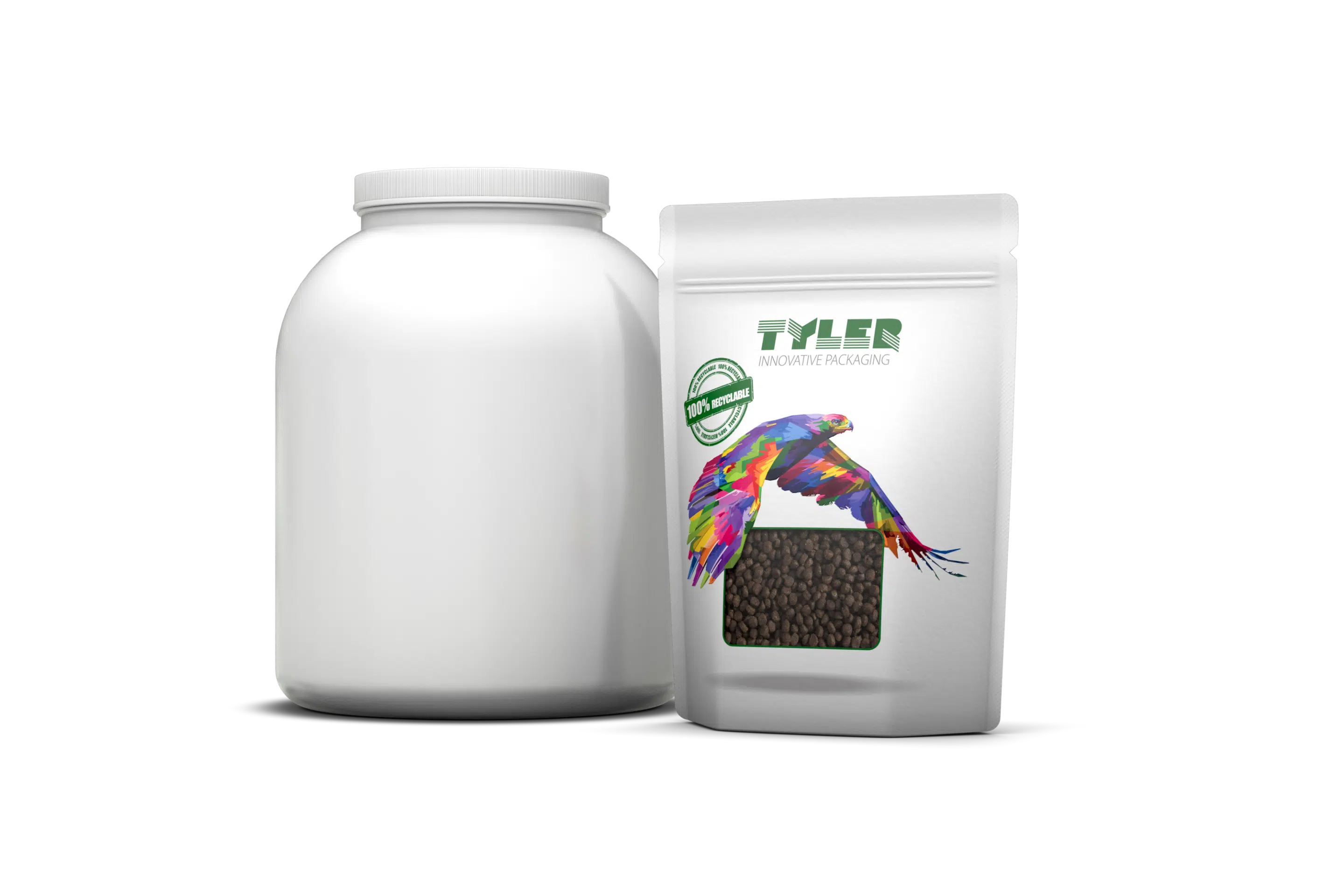
Switching from rigid plastic tubs or bottles to flexible pouches (stand-up pouches, spout pouches, or flat-bottom bags) can cut plastic use by 60-80% for the same fill volume, since flexible formats use a fraction of the material to achieve equivalent product protection. This shift is already well underway in pet food, sports nutrition, and liquid concentrates. - Incorporate Recycled Content
Post-consumer recycled (PCR) resin can often be blended into packaging structures without hurting performance, particularly in non-direct-food-contact layers. More recycled content reduces virgin plastic demand and is increasingly factored into EPR fee calculations, where lower-impact materials can mean lower fees. - Eliminate Unnecessary Layers and Components
Multi-layer laminates sometimes include layers added for historical or precautionary reasons rather than functional necessity. A structural review, one that checks whether each layer (and accessories like spouts, zippers, or valves) is earning its place, can turn up opportunities to simplify the structure and cut material use. - Design for Compliance From the Outset
Rather than treating recyclability as an afterthought, brands are now building Design for Recycling principles into new product development from day one. That means choosing compatible inks and adhesives, avoiding problematic additives (PFAS thresholds under PPWR are now a key consideration), and defaulting to mono-material structures rather than treating them as the exception. Designing for compliance up front avoids costly reformulation later and puts a brand ahead of regulatory deadlines.
The bottom line: plastic reduction isn’t a single switch. It’s a set of decisions across material selection, structural design, and pack sizing that add up over time. Brands that start now, with PPWR’s August 2026 deadline approaching, will be better positioned on both compliance and cost as regulatory and retailer pressure keeps building.
Date posted: 24/07/2026
Not Sure Where to Start?
Most brands don’t need to tackle all seven of these at once. The right starting point depends on your current structure, your category, and how exposed you are under PPWR’s August 2026 deadline.
Our team can review your current packaging structure and flag the quickest wins on material, weight, and fill-to-pack ratio, no obligation. Get in touch ! Click the link here
Talk to our team about mono-material conversion. If you’re currently running multi-layer laminates, we can show you what a mono-material equivalent would look like for your product, including barrier performance and cost impact. Order your free sample pack, or simply get in touch !
Download our PPWR compliance checklist. A practical, one-page guide to the August 2026 requirements, including PFAS thresholds, Design for Recycling grading, and EPR fee implications. Download the checklist here!
Whichever stage you’re at, we’re happy to talk through what’s realistic for your product range. Contact us to start the conversation.